Ah, che bellu ‘ccafè sulo a Napule ‘o sanno fa’ translation: Ah, what a beautiful coffee, that only in Naples they know how to make; the words sung by famed singer Domenico Modugno. After sipping it firsthand in Naples and getting a lesson on its preparation, I can attest that the songster praised the brew for good reason.
Coffee culture in Italy began in Naples in the 1700s when coffee trade in Europe began its expansion. Napoli, being an import seaport became the epicenter for the import of coffee and, the first coffee shops were born in the city’s alleys.
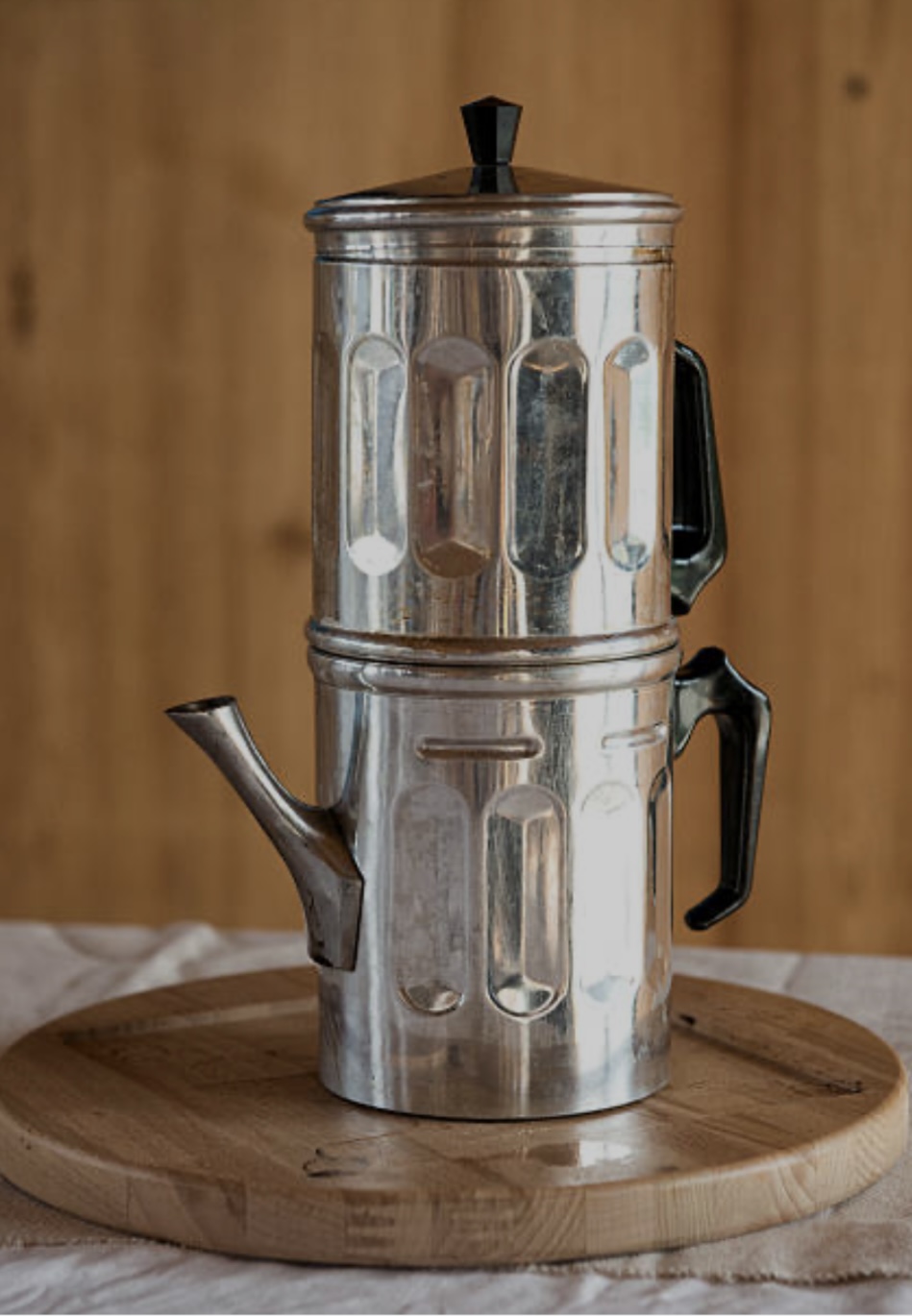
Coffee in this southern Italian city, is known for its intense, full-bodied flavor with a dark cocoa aftertaste, often made with high-Robusta blends. Unlike espresso made from the traditional Moka pot, caffe Napoletano is brewed in a very specific manner using a very specific flip pot.
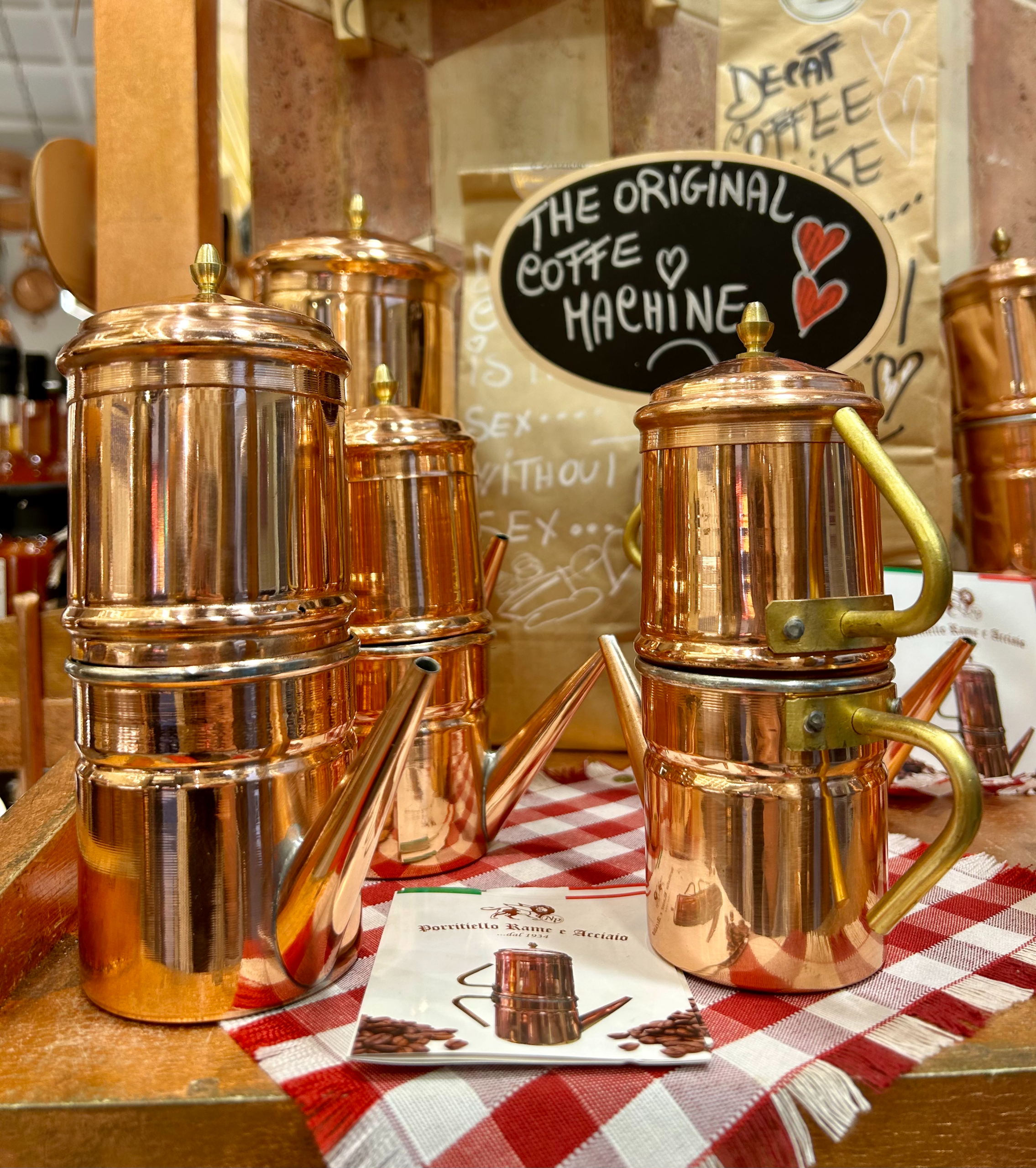
Let’s begin with the pot, known as the cuccumella (which is Neapolitan for small pot or vessel). It consists of a water tank, a coffee filter chamber, and a kettle part. This unique caffettiera predates the Moka and is French in origin. The reversable coffee pot was created by Jean Baptist de Belloy, the archbishop of Paris, in the 1800s. It was initially designed in copper, making it available only to the elite. It was later reinvented by the Napoletani and became a widespread household item in the 1900s when aluminum became the material from which it was produced. Where the cuccumella differs from the Moka is that it does not use the pressure of steam to force the water through the coffee, it relies instead on gravity.
The components of the cuccumella are: the water tank with a curved handle and small hole in the upper side, the filter that gets filled with ground coffee, in the shape of a hollow cylinder open on one side and the other side with holes that allow for the passage of the water in the boiling process, the coffee service jug, which collects the beverage, an upside-down pot with a downwards spout that is turned upwards and the lid for covering the brew when serving.
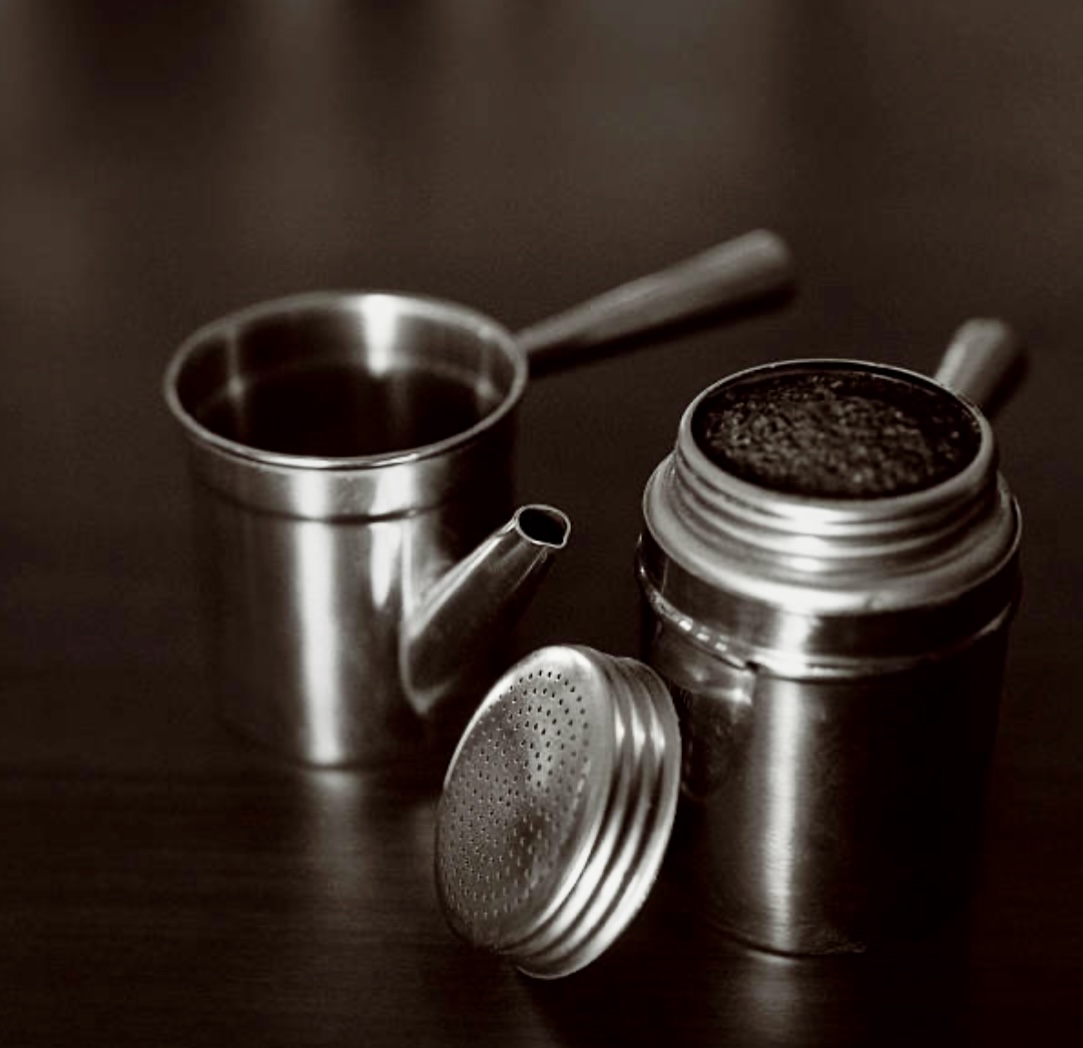
You begin by filling the tank with water, then insert the filter and the ground coffee and then the jug with the spout is inserted. The pot is placed over medium low heat (this is crucial so as not to scorch the coffee). Once the boiling temperature is reached, steam will begin to come out of the small hole in the tank. This means that it’s time to turn off the heat and invert the coffee maker. The extraction has started. The process is called l’attesa (the wait) and a small paper cone called a cuppetiello is placed over the spout to keep the aroma in while it brews. This is the ritual, the wait of 5-10 minutes for the extraction, is meant not only to reveal subtler flavor notes in the coffee but also to encourage conversation.
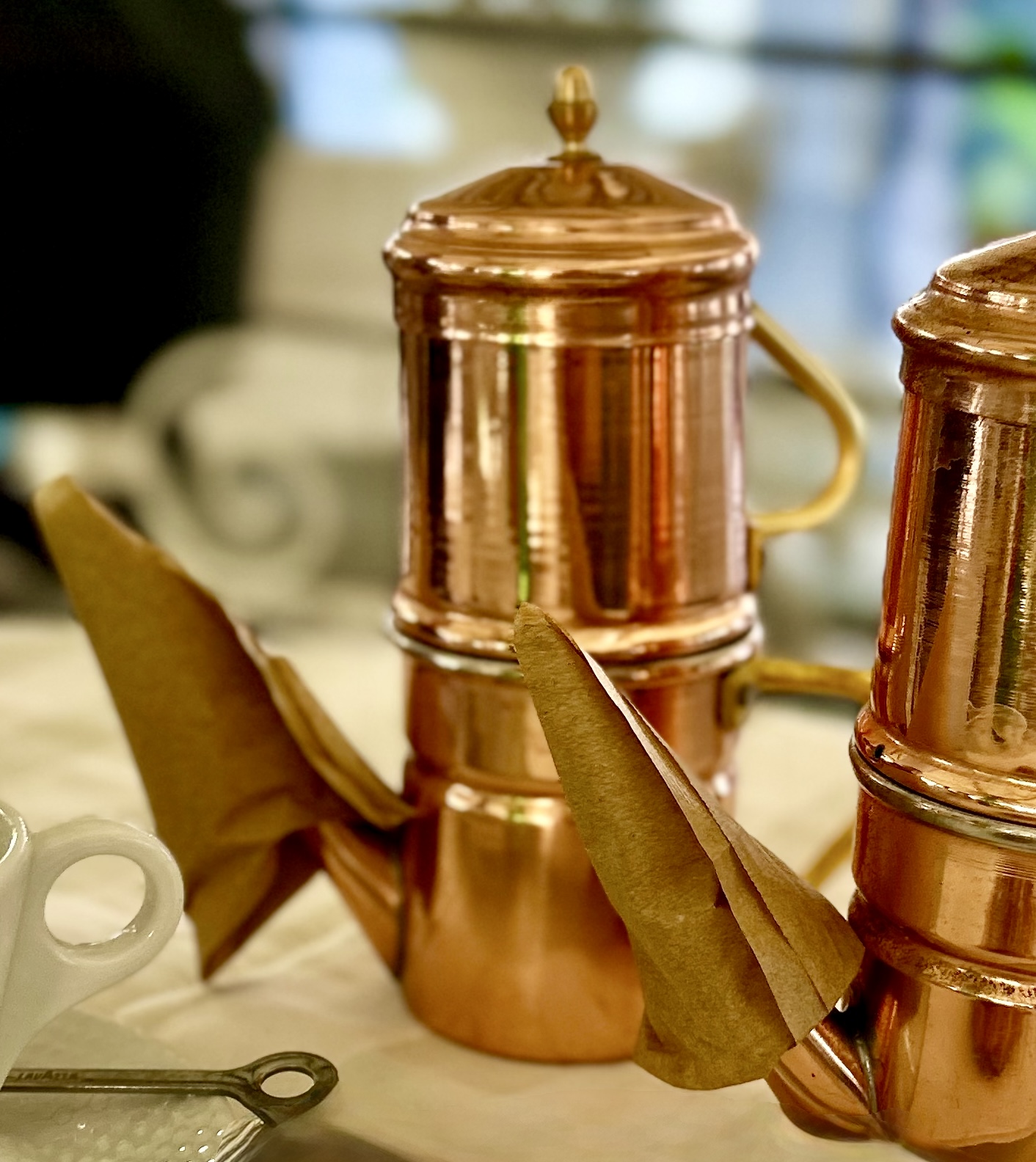
The ritual of caffe Napoletano is concluded by pouring the coffee into the unmistakable Neapolitan cup: low, flared, wide, thick, very thick, to fully savor this coffee. It is also traditional to have a small glass of water before drinking the coffee to cleanse the palate to better enjoy the flavor of the coffee.

The cuccumella has become an icon of Napoli, in fact, it is so culturally significant that it appears in Neapolitan literature, songs, folklore and film, symbolizing home, family and southern Italian coffee culture.
If you’ve never experienced the ritual and your travels take you to Naples, I highly recommend enjoying a tazzulella ‘e cafè. Buon Appetito!