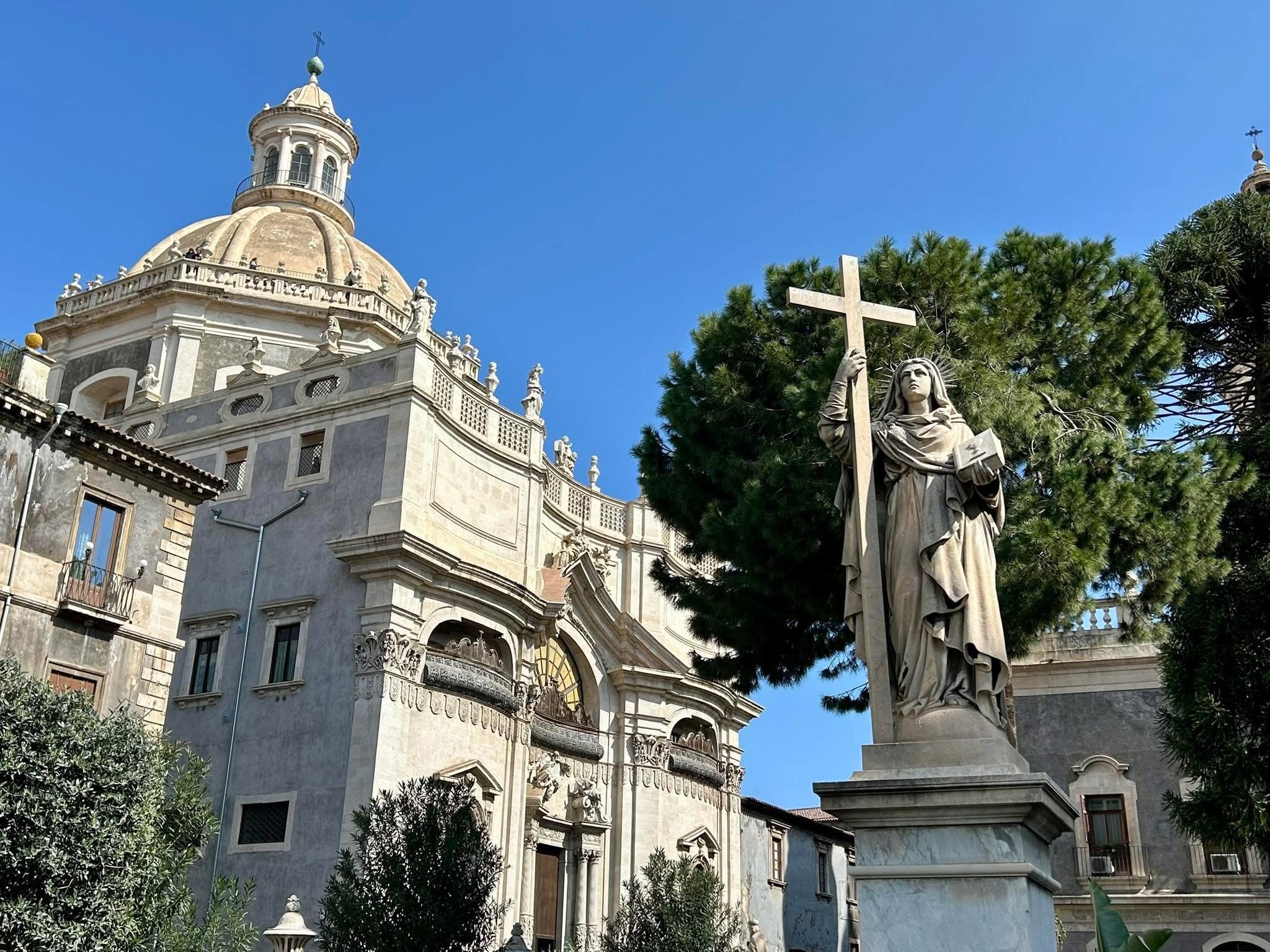
February 5th is the feast day of Sant’Agata (Agatha) one of the most highly venerated virgin martyrs of Christian antiquity. I learned of Sant’Agata just last year when I attended an event organized in her honour (shoutout to Tre Mari Bakery and That Nonna Life). That education was further enhanced when I visited the city of her patronage, Catania. According to legend,15-year-old Agata, made a vow of virginity to the Lord. In maintaining that vow, she was said to have rejected the amorous advances of the Roman prefect Quintianus. Though persistent, the local governor could not turn her away from her vow and exacted his revenge on her by reporting her to the authorities as a Christian to be subjugated during the Decian persecution (250–253). Quintianus believed that once Agata was faced with torture and possible death, she would give in to him, but she simply reaffirmed her faith.
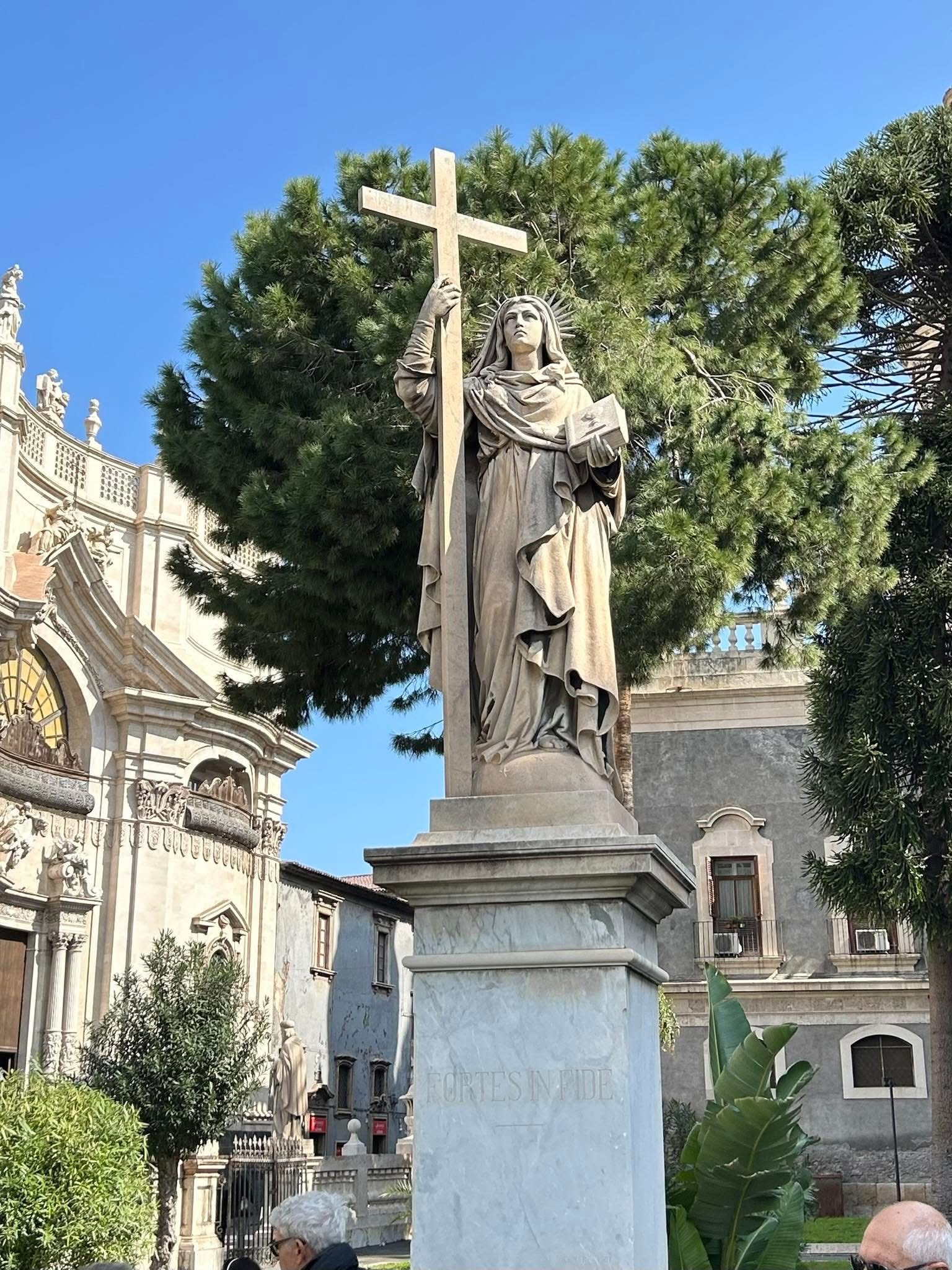
When Agatha turned away his advances he sent her to a brothel as punishment. She refused to accept customers and was sent back to Quintianus. Agatha was then imprisoned, suffered repeated tortures, and then brutally had her breasts cut off. She was eventually ordered to be burned at the stake however, an earthquake prevented this from happening, and she was instead sent to prison, where St. Peter the Apostle appeared to her and healed her wounds. In one final act of hatred against Agata, Quintianus ordered that she be forced onto a bed of hot coals. While she lay burning on the coals, the red veil she wore, stayed miraculously intact.
An earthquake struck Catania during this last torture of Agatha, and Quintianus became fearful for his safety and fled the city, while Agata was returned to prison. One story suggests that while being led back to prison by Roman soldiers, she bent down to tie her sandal. Where her food touched the earth an olive tree started to grow and bear fruits. Agata died in prison on February 5, in the year 251.
The people of Catania believe that the carrying of Saint Agatha’s veil in procession, has saved the city from many eruptions of Mount Etna, earthquakes, the plague, and is also responsible for saving the people of Catania from the wrath of Emperor Fredrick II in 1231. She is the patron saint of Catania as well as the patron of bakers and breast cancer patients. She is often depicted wearing a crown of flowers or holding a palm branch, symbolizing her purity. With long blond hair, a white tunic or red translucent veil, she appears both delicate and powerful, embodying strength, pride and protection.

As the patron of Catania, Sicily, she is venerated every year, and part of the celebration includes partaking in a pastry known as Minne di Sant’Agata (Saint Agatha’s Breasts) or Minnuzzi ‘i sant’Àjita in Sicilian dialect. They are small, dome-shaped cakes designed to represent breasts. They are soft sponge cakes soaked in liquor, filled with sweet sheep’s milk ricotta, dark chocolate chips, and often diced candied fruit (citron or orange). The cakes are covered in white icing or marzipan and then topped with a candied cherry (to represent a nipple) and are typically eaten in event numbers.
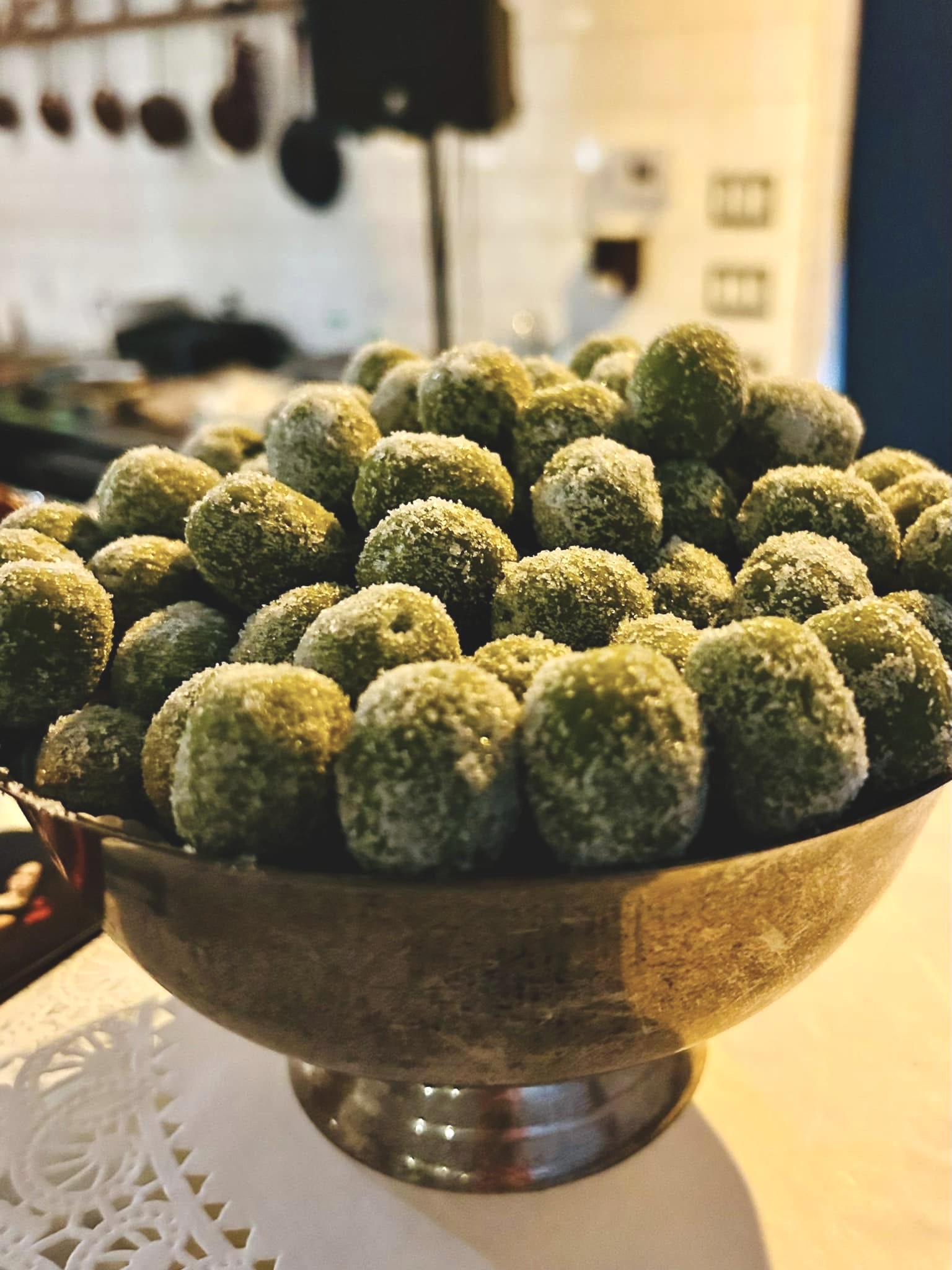
Celebratory confections also include Olivette di Sant’Agata (Saint Agatha’s Little Olives). The olivette as their name suggests are small, green, olive-shaped sweets. They are made from marzipan, sugar and green food coloring and are often enjoyed alongside the minne. Their shape is symbolic of the miracle of the olive tree.
Each of these emblematic treats and a sublime way to celebrate La Festa di Sant’Agata. Buon Appetito!