
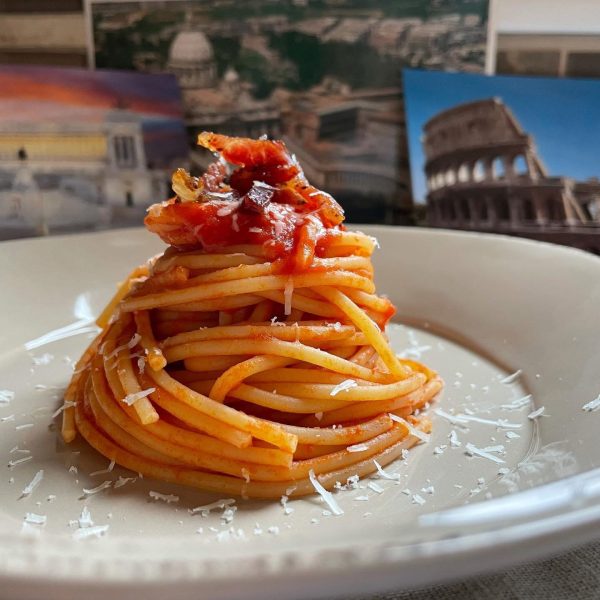
This year, on March 6th, we will celebrate the inaugural, International Amatriciana Day. Launched by the Association of Restaurateurs and Hoteliers of Amatrice (ARAM), the holiday is intended to honour the iconic, Roman pasta dish. Amatriciana Day was also instituted with the aim of promoting Amatrice and its surroundings, a region of great natural and cultural values. The event will represent a significant sign of rebirth for this area severely affected by the tragic earthquake of 2016. This date specifically, commemorates the day in 2020 when Amatriciana was recognized as a Specialità Tradizionale Garantita (STG) or Traditional Speciality Guaranteed (this prestigious status ensures that only dishes following the strict, original recipe—using specific ingredients such as guanciale from Amatrice and Pecorino Romano).
I still recall the first time I tasted pasta Amatriciana. In 2008, I was lucky enough to spend a month traveling through Italy; my first stop, the heart of the boot, its capital city, Rome. It was here where a journey of discovery began; exploring the ruins of the Colosseum and the marvels of the Vatican all the while enjoying an espresso at Piazza di Spagna’s McDonalds (an unlikely spot for Italian coffee but very good I have to admit), a gelato along the Via della Dolce Vita and a regional feast, in a hidden gem called Casa Mia. The tour group I was with was lured into this charming restaurant, but its owner, Enrico, who stood outside the door encouraging passersby to enter (only in Italy).
We were seated and then humbly asked by Enrico, if he could bring out a few of the house specialties rather than having us order from the menu. He assured us that we would not be disappointed; and so we agreed. Needless to say, once the first few platters made their way onto our table, there was no doubt we had made a fine choice. Abundant antipasto platters of crudo, mozzarella di bufala, bruschette and panzerotti alla Romana, followed by an incredible primo of pasta Amatriciana and a secondo of various grilled meats and roasted potatoes. A true Roman feast.
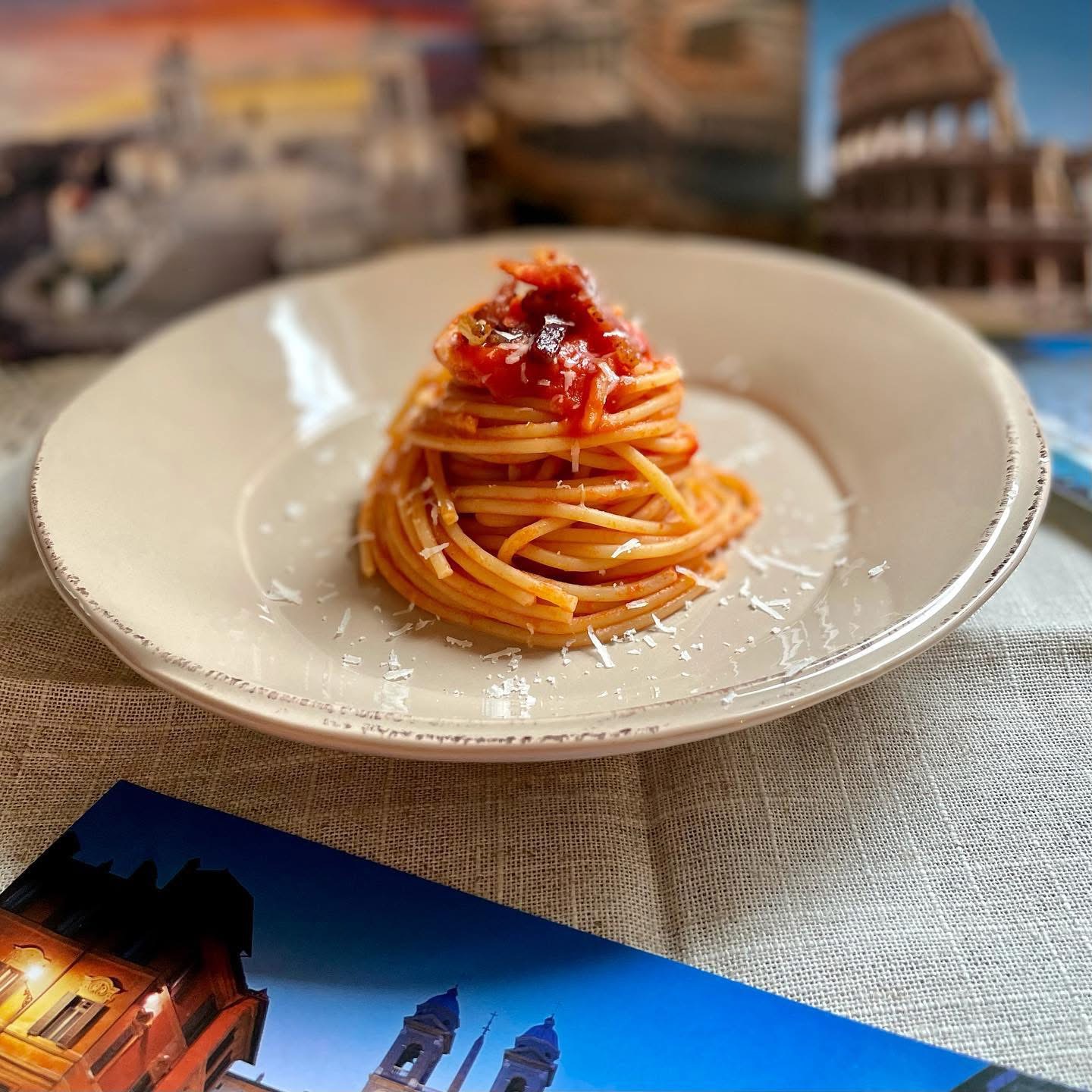
Of all the staples we enjoyed that evening the most revered by far was the pasta Amatriciana, one of the most well-known pasta sauces in Roman and Italian cuisine. It is a pasta sauce whose ingredients reflect local products of Lazio’s mountainous area, guanciale (dried pork cheek), pecorino cheese and tomato. Amatriciana, named for its town of origin, Amatrice, actually derives from a much older sauce called La Gricia, which was made by the grici (shepherds). They gently sautéed diced guanciale to keep it from browning, and added freshly boiled pasta, a healthy dusting of pepper, and grated pecorino Romano. La Gricia evolved into the Amatriciana sauce, when tomatoes were introduced to Italy, in the 18th century. It was initially enjoyed by the nobility, because only they could afford tomatoes.
The recipe became increasingly famous in Rome over the 19th century and early 20th century and went on to be considered a “classic” of the Roman kitchen. While in Amatrice the sauce is served over spaghetti, it is also quite common to find it served over bucatini in Rome. No matter the pasta, it remains a favorite and it will forever remind me of my incredible evening tra amici at Casa Mia. Buon Appetito!
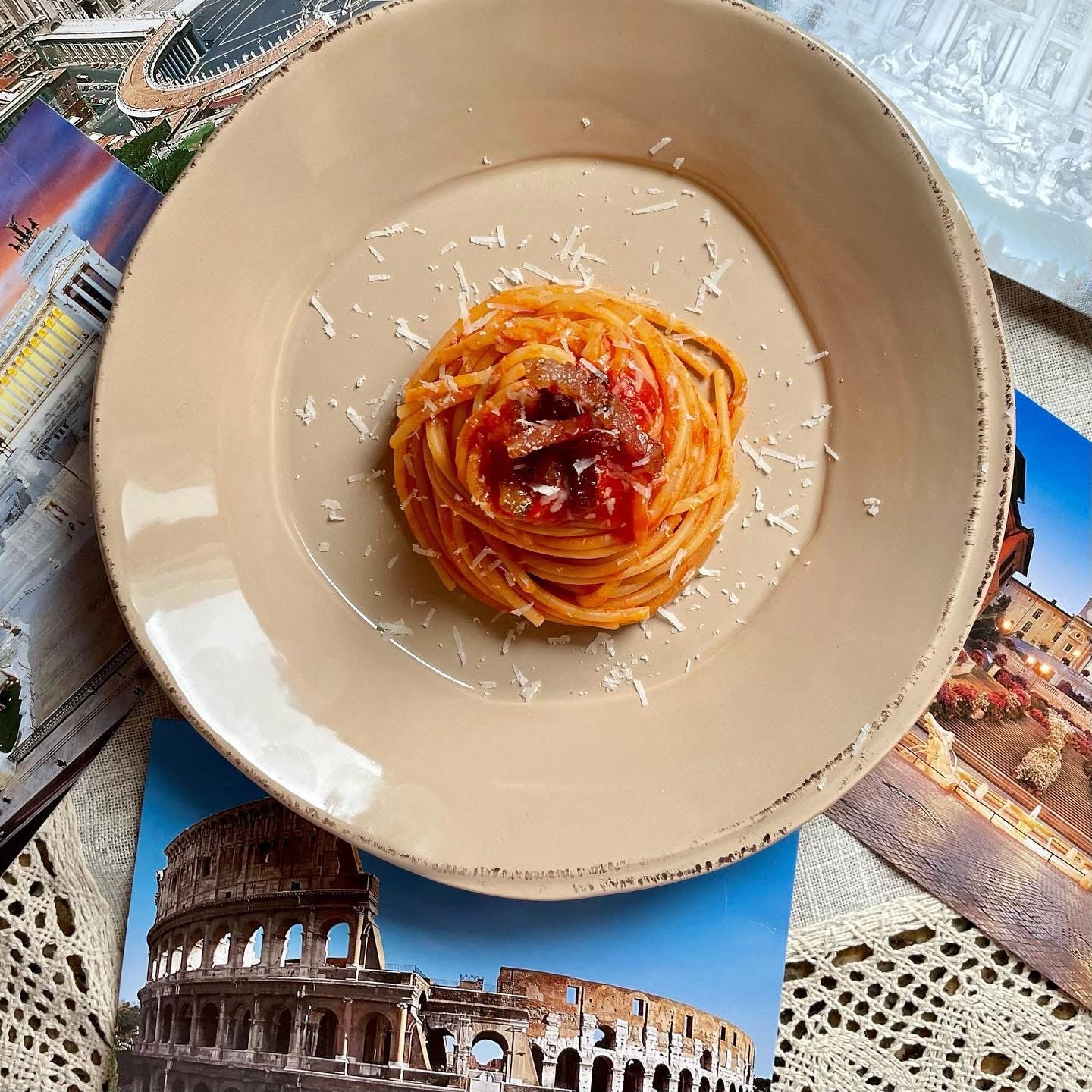
Pasta all’Amatriciana
Ingredients:
- 1 35-ounce can San Marzano tomatoes*
- Salt to taste
- 5 tablespoons extra virgin olive oil
- 1 medium onion finely diced,
- 1/3 cup diced guanciale or pancetta**
- ½ teaspoon crushed red pepper flakes
- 500 gram package of spaghetti or bucatini
- 1 cup of grated Pecorino Romano
* The tomatoes can either be roughly chopped or strained through a food mill for a smoother consistency
**Guanciale, the salt-cured pork jowl is similar to pancetta, but not as lean, and has a much richer taste, however it may not be readily available everywhere and can be easily substituted with pancetta.
Directions:
In a large pan, heat the olive oil over medium heat and add in the onions, sautéing until softened. Next add in the pancetta and cook for approximately 2 minutes. Add in the red pepper flakes, followed by the tomatoes and bring to a boil. Adjust the heat to a simmer, and season lightly with salt. The dish will be finished off with salty pecorino cheese so bear this in mind when checking the seasoning of your sauce. Cook, stirring occasionally, until the sauce is thickened, about 20 minutes.
Meanwhile, bring a large pot of water to a boil, salt the water and cook the pasta according to the package. Once the pasta is cooked, drain it, reserving about 1 cup of the cooking water to use if you find your sauce slightly thick. Toss the pasta with the sauce and then stir in the pecorino cheese and serve.