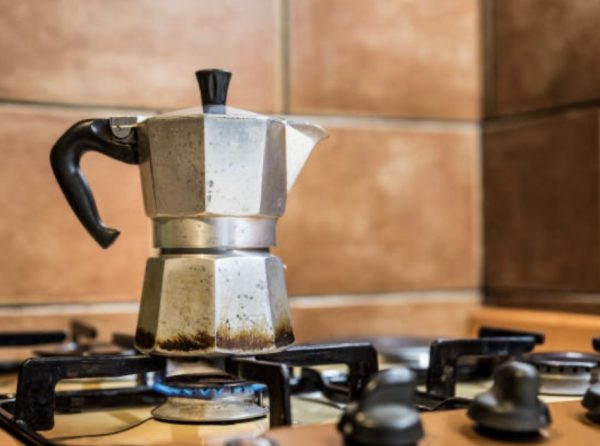
April 21st, 2026, World Day of Creativity and Innovation, and the inaugural Moka Day (which will quite possibly be my new favourite day of the year).
The Moka is an iconic, Italian stovetop espresso maker invented in 1933 by Alfonso Bialetti and is the most utilized piece of kitchenware in my home. I begin every single morning with my Moka; sometimes it’s for a leisurely brew and others it’s a tazzina to go (yes, I have an espresso sized thermal cup).
This coffee machine is not only one of my best friends, but one of the most recognizable symbols of Italian design. Nearly a century after its creation, it continues to have an enormous cultural impact, shaping the way coffee lovers prepare and experience their brew. It is considered one of the most popular coffee-making methods globally, with over 500 million units sold to date (many of which are probably in my own personal collection-I own several different sizes and designs).
The moka pot, also referred to as caffettiera, stove-top espresso maker and Bialetti maker (named after its inventor) is coffee maker that is placed on the range and uses steam pressure to force water through coffee grounds, producing a whistle that has become synonymous with Italian culture. It was designed by Alfonso Bialetti in his aluminum workshop (Alfonso Bialetti & C. Fonderia in Conchiglia—in Crusinallo (VB)). Its innovation was considered a revolution and a true feat of engineering. Bialetti brought the rich, intense coffee traditionally enjoyed in cafés to the homes of Italians, without the large professional machines, found almost exclusively in public establishments.
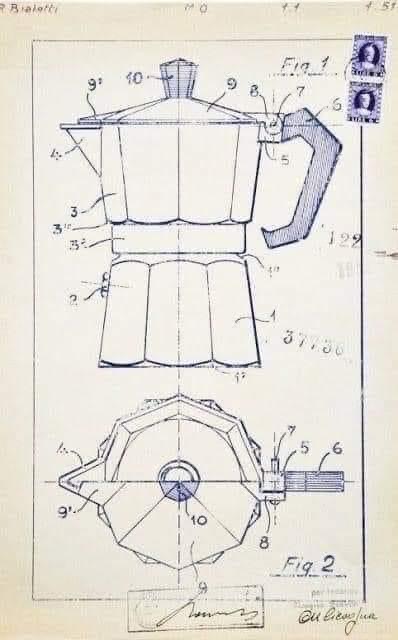
The appliance was designed with an aluminum alloy frame and handles made of synthetic plastic known as Bakelite. It consists of three parts: the boiler, the measuring filter, and the coffee collector. As envisioned in the “Moka” system patent, the octagonal shape (in cross-section) served to increase the grip on wet surfaces (a design that remains entirely unchanged). Bialetti named his distinct design the Moka Express, after the Yemini city of Mokha, one of the first and most renowned coffee-producing areas.
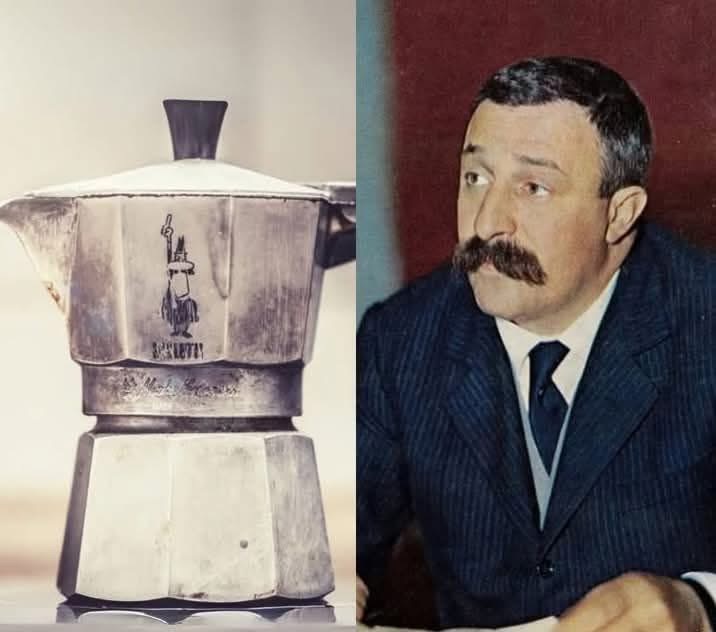
The other distinguishing feature of the stovetop espresso maker is the mascot emblazoned on it, known as l’omino coi baffi (the little man with the moustache). L’omino is a caricature of Alfonso’s son, Renato Bialetti and was created in 1953 by Italian cartoonist Paul Campani. The charming mark of authenticity is very symbolic in nature; the cheerful mustachioed man in the black suit with his index finger raised, gesturing for one more caffe’ represents the charm, quality and simplicity of brewing authentic espresso at home. L’omino coi baffi has become synonymous with Italian coffee culture.
While the caffettiera may be seen as an easy brewing method, it is actually a sensitive system where details matter. It is not merely a case of fill, heat and drink. When it comes to preparing the perfect coffee there are four things to consider: water, grind size, heat control and extraction timing.
Water quality and temperature make the difference. The mineral content in water is key in extraction, therefore using stable water (consistent, potable, with a neutral foundation and free of contaminants) results in a cleaner, more consistent cup. In terms of temperature, starting with preheated water (approximately 60C) reduces overheating during the extraction, avoiding unwanted bitterness.
The grind size will dictate the intensity of your brew, a coarser grind will produce a cleaner, lighter cup while a finer one brings more body.
Most people assume that espresso should be brewed quickly over high heat, but the opposite is true. High heat leads to harsh and unbalanced flavors, therefore, always place the Moka on low heat.
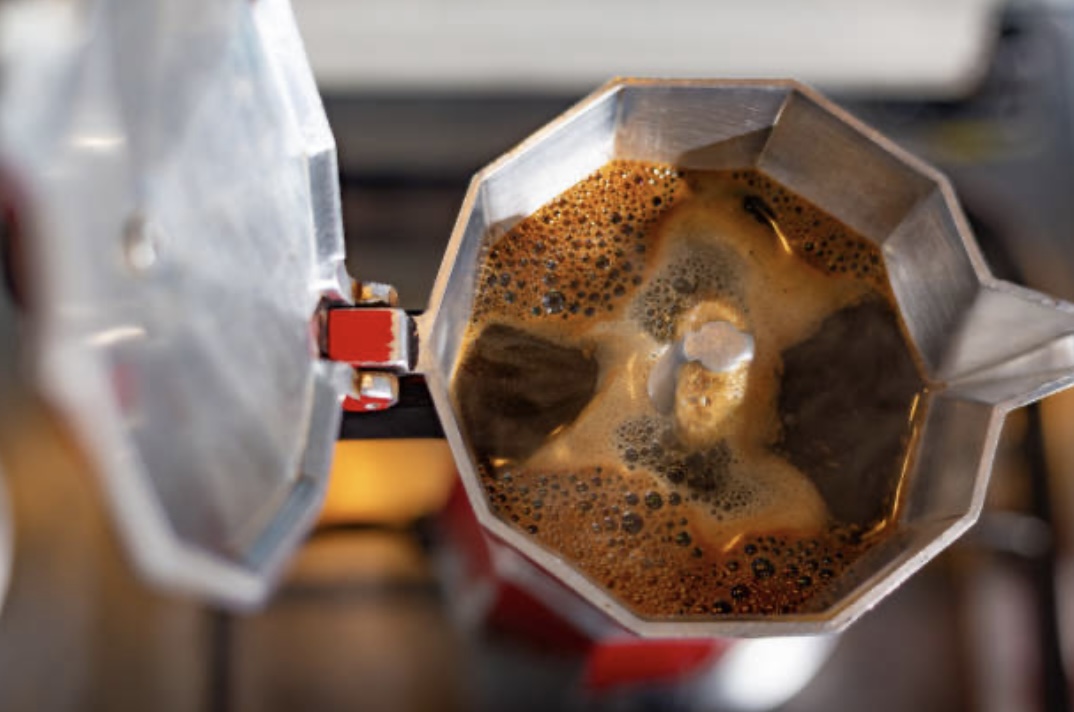
Finally, extraction time; once you begin to hear percolating sounds, remove the Bialetti maker from heat and wait to finish brewing. Keeping the pot on the heat after that point pushes the coffee into over extraction. Adhering to these pointers will deliver a bold, structured and beautifully balanced espresso.
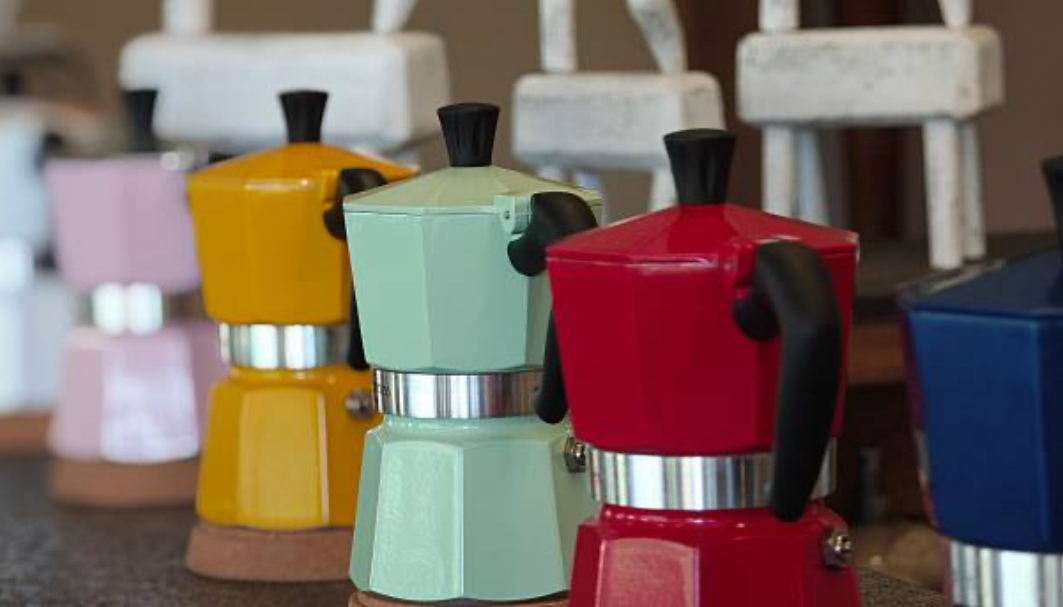
For me, like most Italians, caffe is not just a drink, but a true domestic ritual. The moka pot, with its distinctive bubbling sound and aroma that fills the kitchen, has been an object of affection as well as utility for nearly a century. It is undoubtedly a symbol of Italianita’. Simple, ingenious, and above all, slow. This slowness has always been part of its ritualistic pleasure; the time it takes for the water to boil, the pressure that pushes the liquid through the ground coffee, the familiar whistle that calls you to kitchen and the intense, full-bodied aroma that wafts through the air, spreading its glorious fragrance. Happy Moka Day and Buon Appetito!